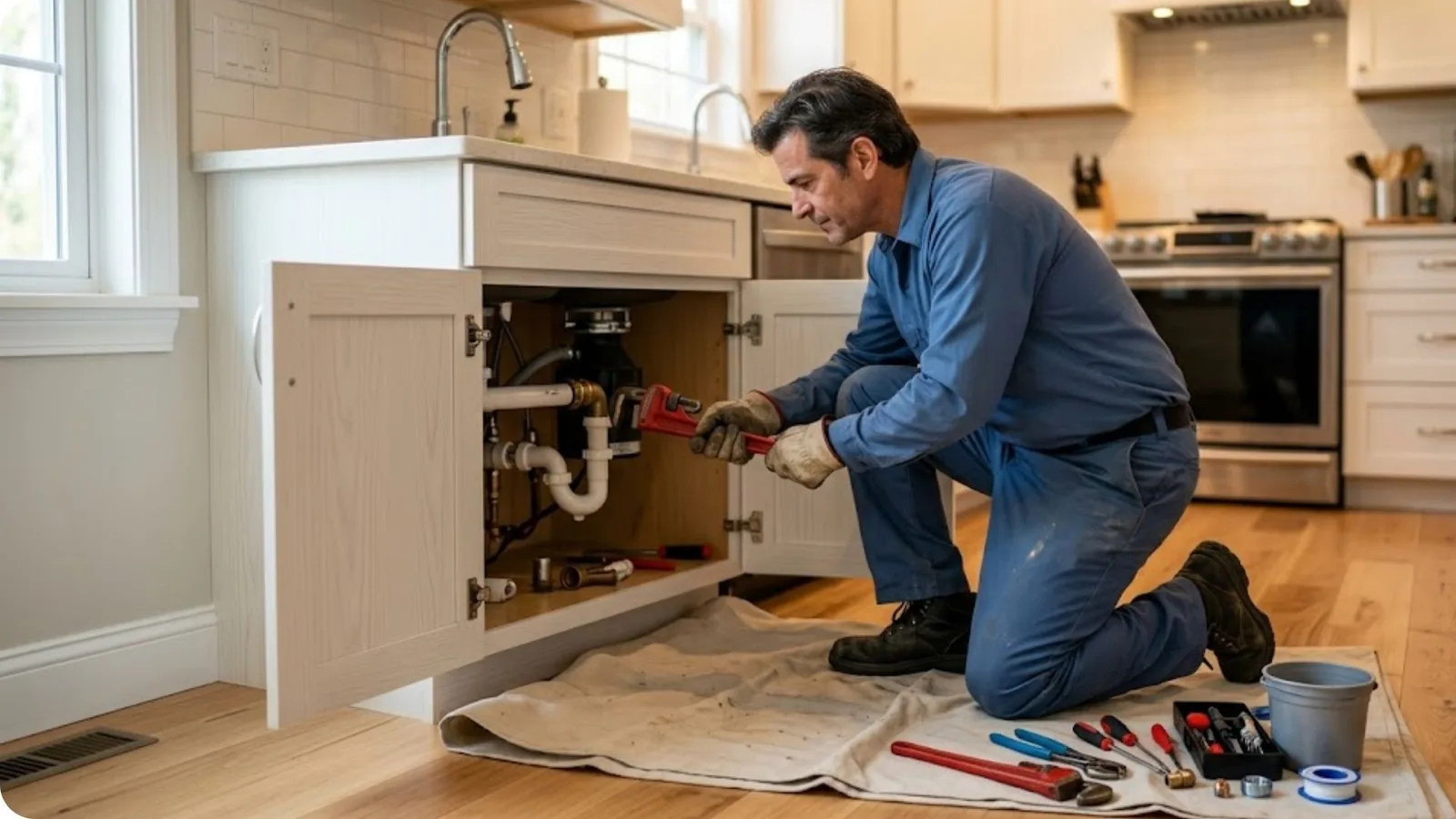
Toilet Repair & Installation in Alpharetta, GA
Running toilets, leaks at the base, weak flush, broken flange, full replacements. Most repairs same-visit; low-flow installation usually completes in under two hours.
Toilets are simple machines that fail in predictable ways. Running toilets are the leading cause of mysteriously-high water bills (a single bad fill valve or flapper can waste hundreds of gallons a day). Leaks at the base are often a wax ring problem. Weak flushes are usually either fill-volume or vent-related. Each has a known fix.
- Licensed & insured
- Upfront pricing
- Local Alpharetta crew
- Free estimates
Common toilet problems and their actual causes
Running toilet that won't stop refilling. Almost always either the flapper (a rubber seal at the bottom of the tank) is worn and not sealing, or the fill valve (the assembly that refills the tank after a flush) is failing. Both are cheap parts and quick replacements.
Toilet leaks at the base. Almost always a failed wax ring. The wax ring seals between the toilet base and the toilet flange in the floor. When it dries out, cracks, or shifts, water from each flush escapes onto the floor. Replacement needs pulling the toilet, scraping the old wax, installing a new ring, resetting the toilet. About an hour.
Weak flush. Two main causes. (1) Tank water level too low, fill valve needs adjustment or replacement. (2) Clogged rim jets and siphon jet from mineral buildup, common in our moderately hard water. Vinegar treatment or jet cleaning resolves most of these.
Phantom flushing (water turns on briefly with no use). Almost always a slow flapper leak that drops the tank level enough to trigger the fill valve. Replace the flapper, problem solved.
Toilet rocks when sat on. Loose bolts or, worse, a damaged toilet flange. If the flange is broken, the toilet can't be securely attached and the wax ring won't seal, flange repair is the underlying fix.
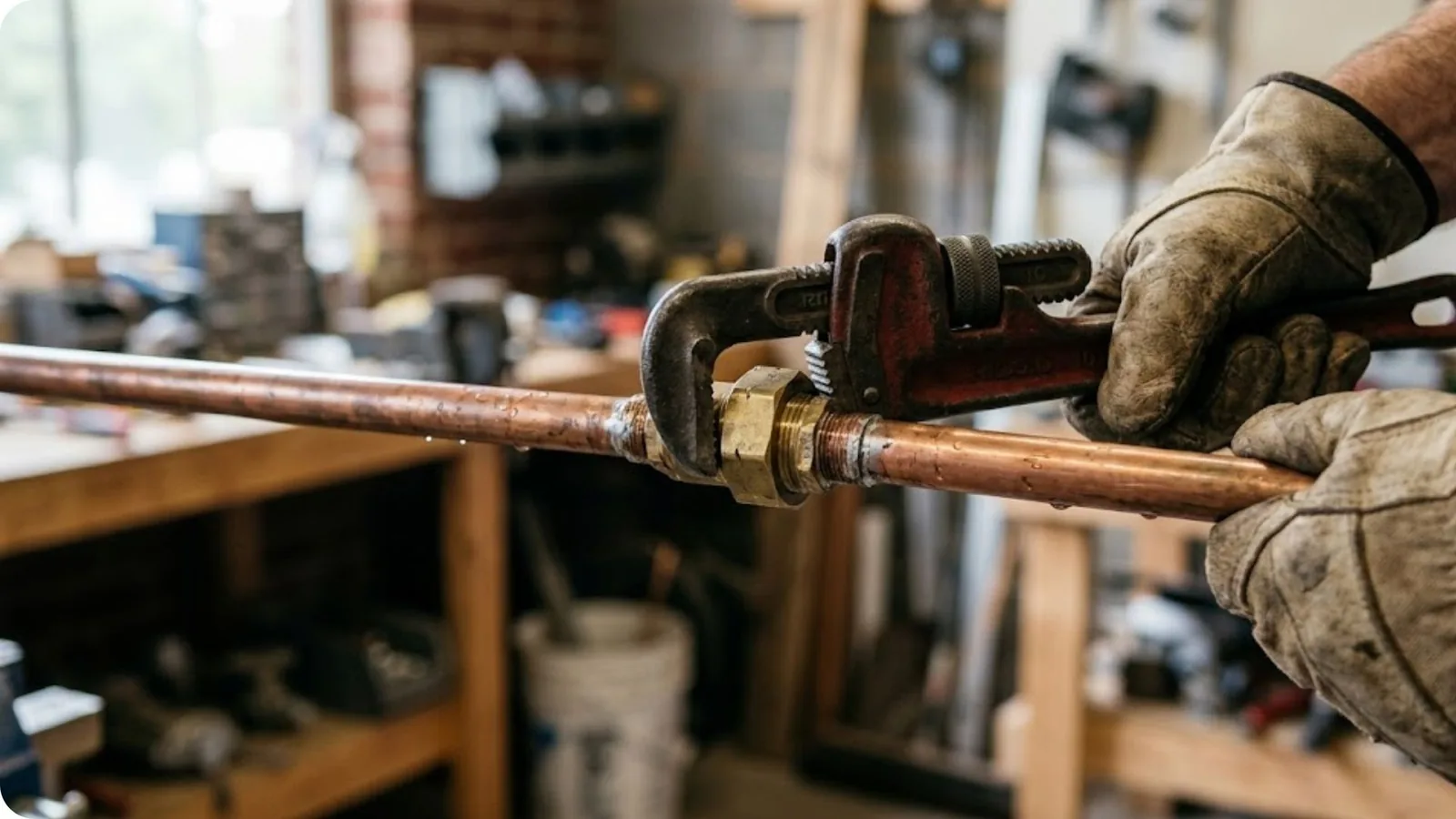
Repair sequence and what's actually in scope
Most toilet repairs fall into one of five jobs we do all the time:
1. Flapper + fill valve replacement. Tank-only work. 30–45 minutes. No floor demo. Common toilet age 5+ years.
2. Wax ring replacement. Pull toilet, clean flange, install new wax ring, reset toilet, caulk base. 60 minutes. Standard wear-and-tear repair.
3. Toilet flange repair. Broken or corroded flange needs to be removed and replaced. Sometimes minor floor work is needed to access. 1–2 hours.
4. Supply line replacement. Old rubber or plastic supply lines fail at the connection. Replace with braided stainless. 20 minutes.
5. Full replacement. Old toilet out, new toilet in. Includes new wax ring, supply line, and bolt set. 90 minutes for a straightforward swap.
For low-flow upgrades (current code needs 1.6 GPF or less; Alpharetta plumbing code allows down to 1.28 GPF on new installs), we recommend a quality 1.28 GPF model that flushes well. The cheap big-box 1.28 GPF toilets often need to be flushed twice, which defeats the water-saving purpose.
Toilet installation and selection
For replacements, we install Kohler, American Standard, and Toto models. All three brands make reliable 1.28 GPF toilets that actually clear the bowl in a single flush, important because the bargain low-flow toilets that don't are why some homeowners think low-flow toilets don't work.
Comfort-height toilets (17–19 inches to the seat vs the older 14–15 inch standard height) are now the default for most installs. Aging-in-place planning, knee-and-back comfort, and most modern bathroom design favor comfort height.
If your home is in an older Alpharetta neighborhood and still has cast iron drain pipe at the toilet flange, replacement timing is a good opportunity to upgrade the connection. We use a brass or PVC closet flange depending on existing pipe material.
Water bill impact and Fulton credit
A running toilet is among the most expensive plumbing problems on a per-gallon basis. A flapper that doesn't fully seal can leak silently for weeks before you notice the bill impact. We've seen single-toilet leaks that doubled a household's water bill.
If you've had a high bill that traces back to a running toilet, repair the toilet first, then submit a Fulton County leak adjustment request with our repair invoice attached. The credit is one-time and reduces (but doesn't eliminate) the affected bill.
For households planning a multi-toilet upgrade, swap them all at once, labor cost per toilet is lower when we're already on site. You get the water-savings benefit immediately across all fixtures.
Cost of this service in Alpharetta
Toilet work is mostly low-cost, predictable scopes. Running toilets, fill valve replacements, and flapper jobs are the most common. Full toilet installs and flange repairs are larger scopes.
| Typical scope | Price range | Notes |
|---|---|---|
| Running toilet repair (fill valve, flapper) | $145–$245 | 30–45 min on-site |
| Wax ring replacement (toilet leaking at base) | $195–$385 | includes pull and reset |
| Toilet flange repair (corroded or broken flange) | $285–$685 | concrete or tile floor varies |
| New toilet install (you supply or we supply) | $245–$850 | label includes labor; toilet itself varies |
What moves your project within the range:
- Whether you supply the toilet or we supply. Both work.
- Flange condition. Corroded flanges need repair before the new toilet sets cleanly.
- Floor material. Tile and concrete floors are simpler than older wood subfloors that may need rot repair.
- Whether the supply line and shutoff valve are working. Original 1980s saddle-valve shutoffs often fail when used and need replacement at the same visit.
These are call-to-talk ranges based on typical Alpharetta-market scope. They are not a quote. Every job we run starts with a fixed price quoted before any work begins.
Live dispatcher · 24/7 · Licensed & insured
Frequently asked
Why does my toilet keep running?
Almost always a worn flapper or a failing fill valve. Both are quick, cheap replacements. A running toilet can waste hundreds of gallons a day, so it's worth fixing fast, and it's a likely cause of an unexplained high water bill.
Can I replace a wax ring myself?
Yes, with care. Pull the toilet (heavy, awkward), scrape the old wax (sticky), reset on a new ring (alignment matters), tighten bolts evenly (over-tightening cracks porcelain). Most DIY attempts work; some result in a second wax ring failure within months because the seal wasn't seated correctly. We charge about an hour of labor for the same job.
How long does a toilet last?
The porcelain itself lasts effectively forever. The internal mechanisms (flapper, fill valve, supply line) last 5–10 years before they need replacement. A toilet that's never had its internals replaced and is 15+ years old is on borrowed time.
Are low-flow toilets actually any good now?
Yes, if you buy a good one. Cheap big-box 1.28 GPF toilets often need to be flushed twice, which uses more water than an older 1.6 GPF model. Quality 1.28 GPF models from Kohler, American Standard, and Toto clear the bowl reliably in a single flush.
My toilet rocks. Can you just tighten the bolts?
Sometimes. If the rocking is from loose bolts on a sound flange, tightening fixes it (carefully, over-tightening cracks the porcelain base). If the flange itself is damaged, tightening won't help and the flange has to be repaired or replaced.